
Acetaminophen is one of the most common medications on our shelves, and one of the easiest to accidentally double up on.
The problem usually isn’t someone ignoring the label.
It’s someone reading three different labels, following all three correctly, and never noticing that acetaminophen is in all three products.
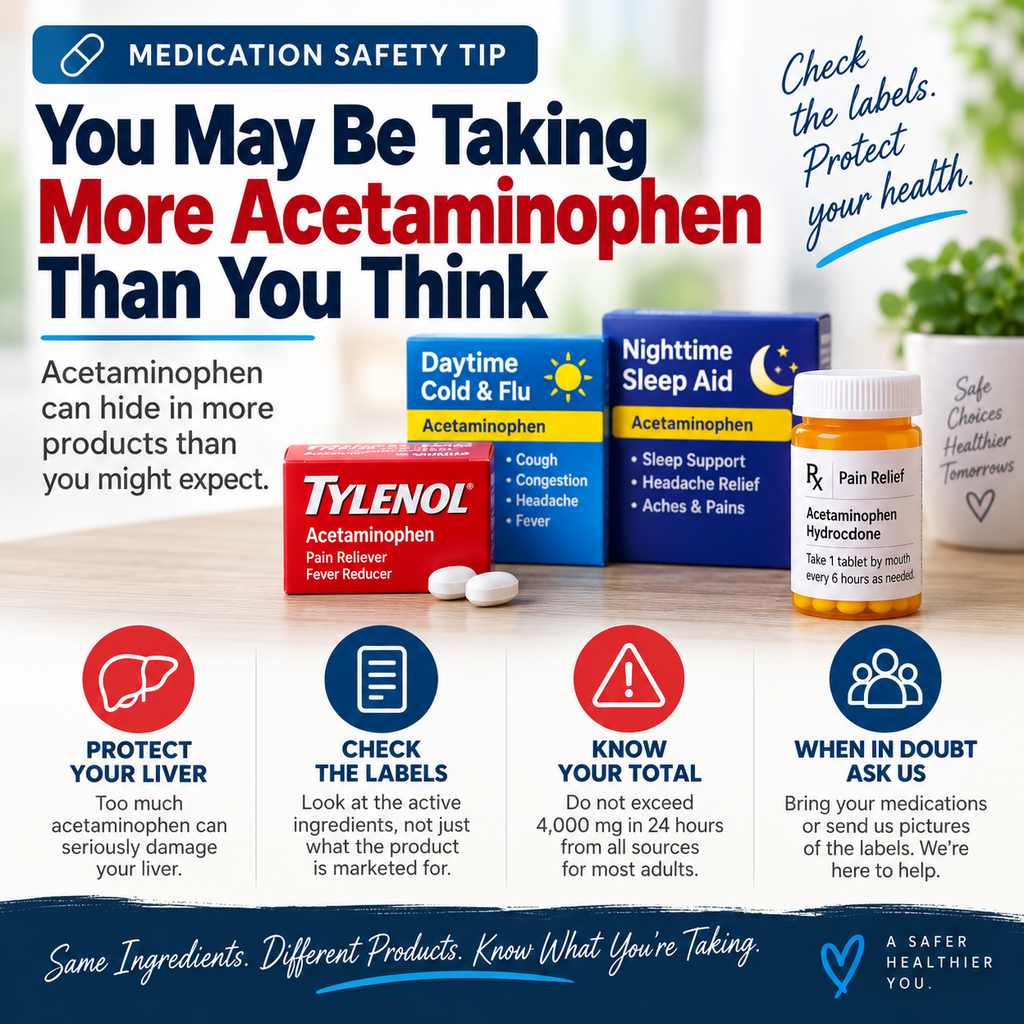
Where Does Acetaminophen Hide?
Everybody knows acetaminophen is in Tylenol. That part is easy.
But it’s also found in many daytime and nighttime cold and flu medicines, sinus products, headache combinations, sleep products, and some prescription pain medications.
You may also come across the abbreviation APAP, which is another term used for acetaminophen.
Picture a normal week:
You have a cold, so you take a daytime cold medicine.
Your back hurts, so you take your prescription pain medication.
You can’t sleep, so you grab something with “PM” on the box.
Three products. Three different labels. All followed exactly as directed.
But potentially one ingredient, stacked three times.
That’s how accidentally taking too much acetaminophen can happen.
Why Do We Care?
Too much acetaminophen can seriously damage your liver.
The tricky part is that early symptoms of an overdose can be vague. Someone may experience nausea, vomiting, loss of appetite, abdominal discomfort, or fatigue and sometimes there may be very few noticeable symptoms at first.
The good news is that accidental double-dosing is very preventable.
A few seconds spent checking the active ingredients can make a big difference.
If you think you or someone else may have taken too much acetaminophen, don’t wait for symptoms to appear. Contact Poison Control at 1-800-222-1222 or seek medical attention right away.
What We Can See, and What We Can’t
When we have a complete medication list, our pharmacy systems and pharmacist review can help identify duplicate ingredients like acetaminophen.
But that safety check is only as good as the information we have.
We usually can’t see the cold medicine you bought at the grocery store, the Tylenol in your medicine cabinet, or another over-the-counter product unless you tell us about it.
That gap is one of the easiest ways accidental double-dosing can happen.
What Should You Do?
Read the active ingredients.
The front of the box tells you what the product is marketed for. The Drug Facts label tells you what you’re actually taking. Look at the active ingredients before combining medications.
Don’t combine acetaminophen-containing products unless you know it’s appropriate.
If two products both contain acetaminophen, ask your pharmacist or healthcare provider before taking them together.
Know your total.
For adults, the FDA warns not to take more than 4,000 mg of acetaminophen in a 24-hour period from all medicines combined. However, the appropriate daily limit may be lower depending on the specific product, your health, alcohol use, and your healthcare provider’s recommendations.
The important part isn’t just memorizing one number, it’s knowing how much acetaminophen you’re getting from ALL of your medications combined.
If you have liver disease, drink three or more alcoholic drinks every day, or have other health concerns, talk with your pharmacist or healthcare provider before using acetaminophen.
Watch the timing.
Don’t take another dose sooner than directed just because your pain or fever hasn’t improved yet. Follow the dosing interval on the medication label or the instructions provided by your healthcare professional.
Know that APAP means acetaminophen.
Different name, same medication. If you see APAP listed and aren’t sure what it means, ask us.
Be Extra Careful With Children
Acetaminophen can be safely used in many children when given appropriately, but getting the dose right matters.
Children’s doses may depend on factors including age and weight. Always follow the product instructions or the directions provided by your child’s healthcare professional.
Use the dosing syringe, cup, or other measuring device that comes with the medication rather than a household spoon.
And just like with adults, check other cough, cold, fever, or pain products before combining them to make sure you aren’t accidentally giving acetaminophen twice.
If you’re unsure about the correct dose for your child, ask your pharmacist or pediatrician before giving it.
When in Doubt, Ask Us
Tell us what you’re taking over the counter.
Bring your medications to the pharmacy, or take clear pictures of the labels, including the Drug Facts and active ingredients sections, and send them to us through the communication options available at our pharmacy.
We can look at everything together and help make sure you’re not accidentally doubling up on acetaminophen or another ingredient.
At Jones Drug and Compounding, we would much rather spend a minute checking your medications now than have you find out the hard way later.
Keeping you and your family safe is every bit as much our job as filling your prescription.
