Cold and flu season is here, and for some of our neighbors, a little extra caution can make a big difference.
If you have a weakened immune system, common seasonal illnesses such as influenza, COVID-19, RSV, and other respiratory infections may be harder on your body and carry a greater risk of complications.
That doesn’t mean you need to spend the season worrying about getting sick. A few practical precautions can help reduce your risk, and having a plan ahead of time can help you know what to do if symptoms do appear.
Start With the Everyday Basics
Some of the simplest habits are still worth remembering during cold and flu season.
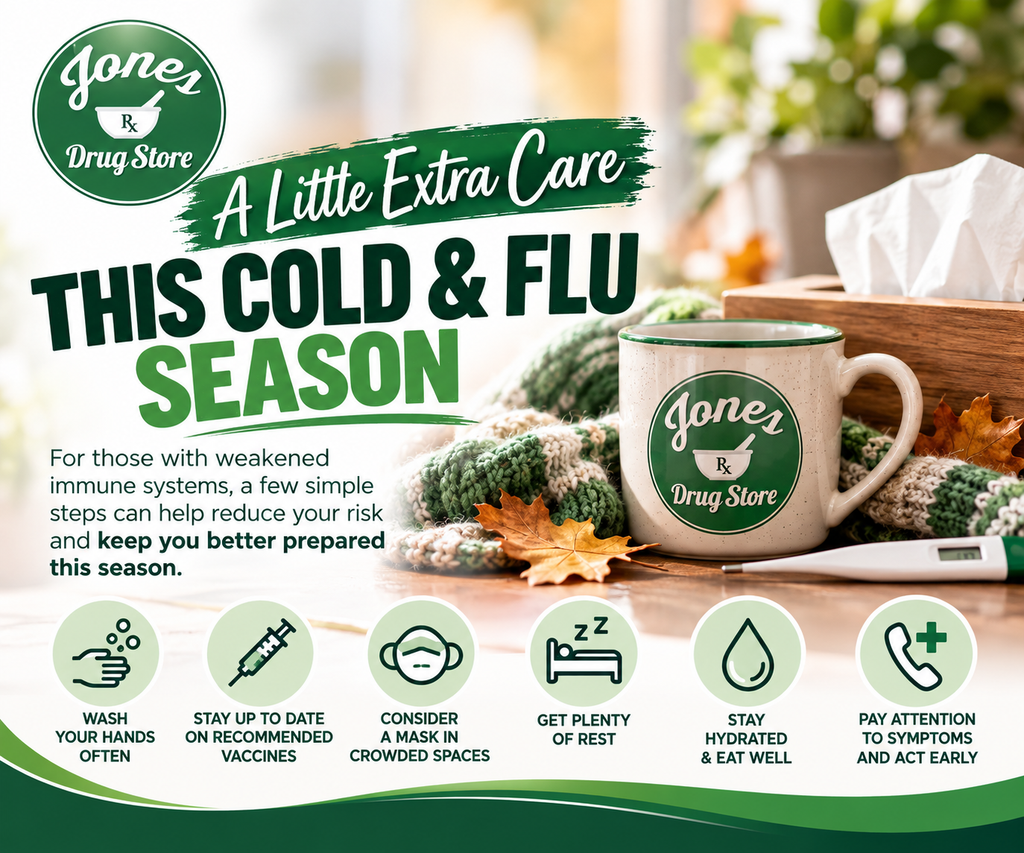
Wash your hands regularly, especially after being out in public, before eating, and after being around someone who’s sick. When soap and water aren’t available, an alcohol-based hand sanitizer is a convenient alternative.
Try to avoid close contact with people who are sick when possible. If respiratory illnesses are circulating heavily in your community, you may also consider wearing a well-fitting mask in crowded indoor spaces.
And don’t overlook the basics of taking care of yourself. Adequate sleep, regular balanced meals, hydration, and appropriate physical activity all contribute to your overall health.
None of these things will guarantee you won’t get sick, but together they can be part of a sensible plan for getting through respiratory illness season.
Ask Which Vaccines Are Recommended for You
Vaccination can be especially important for people who are at increased risk of serious illness.
Depending on your age, medical conditions, medications, and vaccination history, your healthcare team may recommend vaccines for illnesses such as:
- Influenza
- COVID-19
- RSV
- Shingles
- Pneumococcal disease
If you’re immunocompromised, your recommendations or vaccination schedule may be different from someone else’s. Certain vaccines may also need to be timed around medications or treatments that affect the immune system.
Don’t assume you should, or shouldn’t, receive a particular vaccine. Ask your pharmacist or healthcare provider what’s appropriate for you.
Be Careful With OTC Products and Supplements
Cold and flu season usually means plenty of cough medicines, decongestants, pain relievers, vitamins, and supplements start appearing in medicine cabinets.
But just because something is available without a prescription doesn’t mean it’s appropriate for everyone.
Some OTC medications and supplements can interact with prescription medications or may not be recommended with certain medical conditions.
If you’re unsure whether a product is safe for you, ask us before taking it. Bring in the package, show us a picture, or simply tell us what symptoms you’re trying to treat.
Sometimes the best question isn’t “What should I take?”
It’s “What can I safely take with everything I’m already taking?”
Pay Attention to Symptoms and Don’t Wait Too Long
If you have a weakened immune system and start developing respiratory symptoms, don’t assume you always need to wait several days to see whether they’ll go away.
Symptoms may include:
- Fever or chills
- Cough
- Sore throat
- Congestion
- Body aches
- Unusual fatigue
- Shortness of breath
Flu, COVID-19, RSV, and other respiratory illnesses can cause similar symptoms, so it may be difficult to know what you have based on symptoms alone.
Contact your healthcare provider early if you become sick.
Testing may be appropriate, and some antiviral treatments for illnesses such as influenza or COVID-19 can be most useful when started promptly. Your healthcare provider can determine whether testing or treatment is appropriate for your situation.
Have a Plan Before the Sniffles Start
You don’t need an elaborate emergency plan. A little preparation can go a long way.
Before cold and flu season gets into full swing, consider checking a few things:
- Are you due for any recommended vaccines?
- Do you have enough of your important prescription medications?
- Do you have an updated medication list?
- Do you know which OTC cold and flu products are safe with your medications?
- Do you know who you’ll call if you become sick?
- Do you know where you can get tested if your healthcare provider recommends it?
These are much easier questions to answer before you’re home feeling miserable.
We’re Here to Help
Everyone’s health situation is a little different, especially when medications or medical conditions affect the immune system.
If you’re unsure whether one of your medications affects your immune system, whether being immunocompromised changes which vaccines may be appropriate, or which OTC products you can safely use, just ask us.
At Jones Drug, we’re more than a place to pick up your prescriptions. We’re your neighbors, and we’re here to help you stay informed and prepared through every season.
Before the sniffles start, stop by Jones Drug.
Talk with one of our pharmacists about vaccines, medication questions, OTC products, and simple steps you can take to prepare for cold and flu season.
This article is for general educational purposes and is not a substitute for individualized medical advice. People who are immunocompromised may have different vaccination, prevention, and treatment recommendations. Talk with your pharmacist, physician, or other healthcare professional about recommendations specific to you.
